
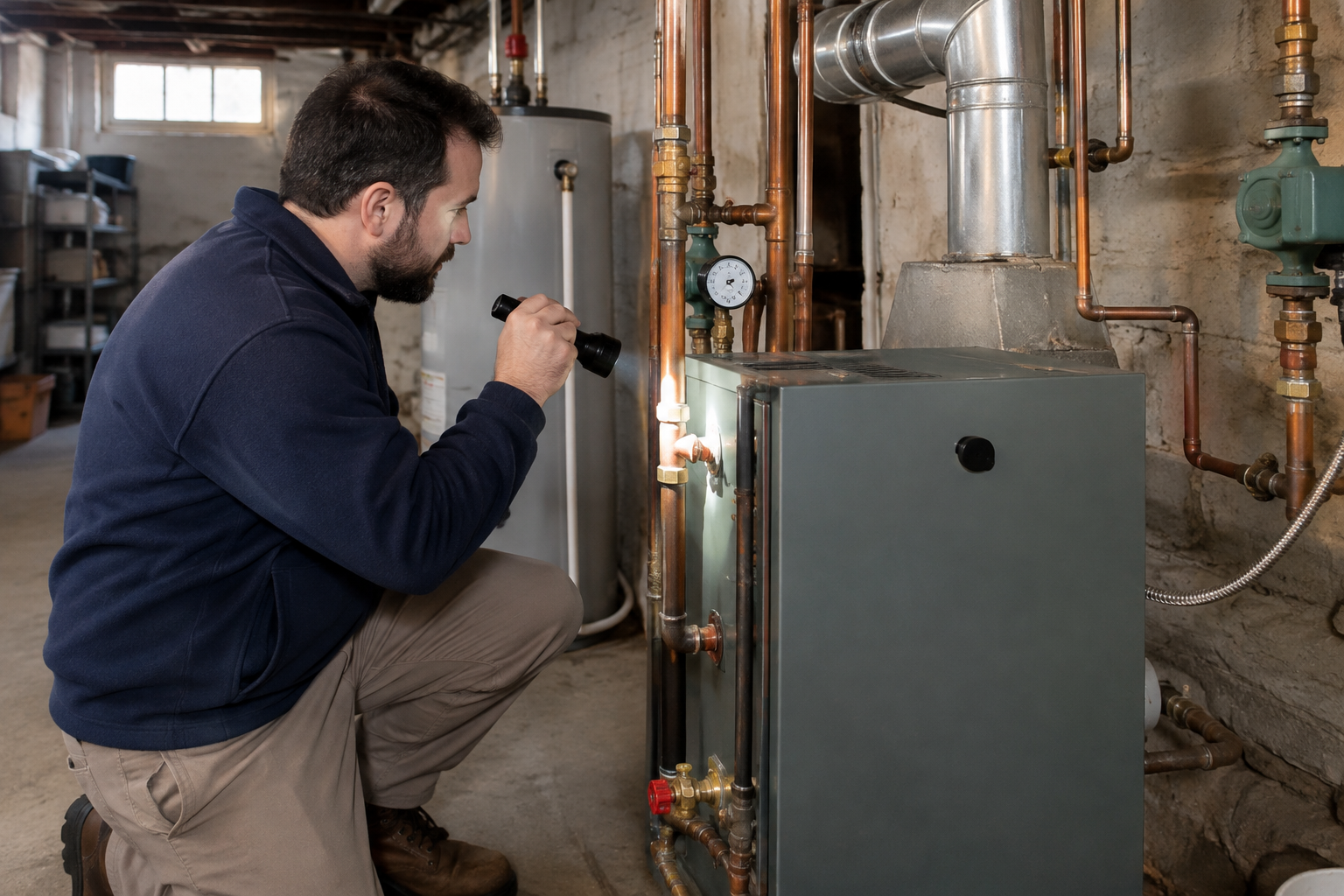
A boiler usually makes strange noises because water flow is restricted, air is trapped in the system, pipes are expanding, or a component needs attention. The sound alone cannot confirm the cause, but where it comes from—and whether it happens at startup or during heating—provides useful clues. As October brings more calls for heat, listen for the difference between a brief pipe tick and a new, persistent noise inside the boiler.
Kettling sounds like a tea kettle heating up: rumbling, popping, or boiling inside the boiler. In a hot-water boiler, mineral deposits or sludge can restrict heat transfer and water movement, allowing localized overheating; a circulation problem can produce similar symptoms. A homeowner in Bethel Park who hears this sound should arrange service rather than assume the boiler is simply working harder. A technician can check circulation and buildup before deciding whether cleaning or a repair is appropriate.
Banging needs context: a light knock from a pipe as it warms can come from expansion against a support or opening. In a steam system, forceful pipe banging may be water hammer, which can happen when steam encounters collected condensate; in a hot-water system, banging may involve circulation or overheating problems. A bang from the burner area at ignition is different and can indicate an ignition fault. Stop operating the boiler and request prompt service for an ignition bang or violent, repeated banging rather than restarting it to reproduce the sound.
Gurgling often means air is moving with the water in a hot-water heating system, although low pressure or poor circulation can also contribute. Note whether the sound comes from one radiator, several rooms, or the boiler itself. In a Sewickley home, that distinction can help a technician separate a localized issue from a system-wide problem. Avoid repeatedly bleeding radiators or adding water without understanding the cause, since recurring air can point to an underlying fault.
Whistling can occur when water passes through a restriction, such as a partially closed valve, or when buildup or a pump problem affects flow. On a steam system, a brief air-vent hiss may be expected, but persistent, high-pitched whistling deserves investigation. Do not adjust unfamiliar valves, change pressure settings, or block a vent or relief-valve outlet to quiet the sound. If there is steam escaping from the boiler, a significant leak, or an unusually high gauge reading, stop using the system and seek professional help.
Before calling, safely record the noise and note its location, timing, and any changes in heating performance; there is no need to remove a cover or touch hot piping. Whether you are in Bethel Park or Sewickley, those observations can make the service conversation more useful without turning diagnosis into a DIY project. Contact MRT HVAC Contracting to have your noisy boiler evaluated by a family-run company serving Greater Pittsburgh for over 30 years, with 24/7 emergency service when an urgent problem cannot wait.
Need a hand with your system?
MRT HVAC serves Greater Pittsburgh with repairs, replacements and 24/7 emergency service.