
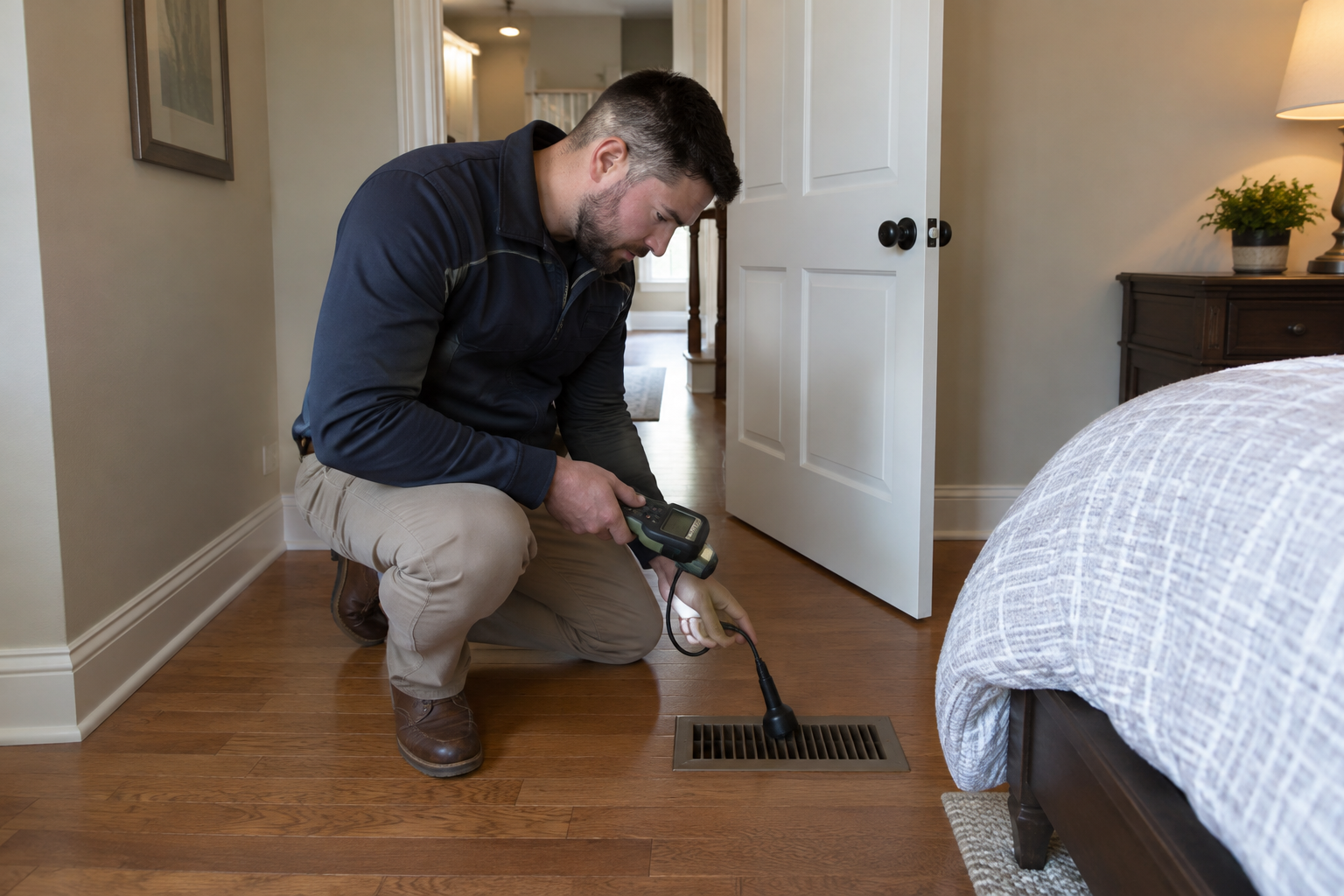
Some rooms are colder than others because they receive too little heated air, lose heat faster than nearby rooms, or need heating after the thermostat has already been satisfied. As November brings more heating hours, those differences become easier to notice. The useful question is not simply whether your furnace makes enough heat, but whether each room receives—and holds onto—the heat it needs.
Ductwork determines how heated air reaches each room, and not every duct path offers the same resistance. Long runs, tight bends, crushed flexible ducts or undersized branches can limit delivery even when the furnace operates normally. A technician can compare room airflow and duct pressure to identify restrictions rather than assuming every cold room needs a larger furnace; duct leakage is another possible contributor, but only one part of the picture.
Balancing means adjusting airflow so each room gets an appropriate share based on its heating needs—not giving every register identical airflow. Before an appointment, a homeowner in Carnegie can uncover supply registers and return grilles, then note whether a cold bedroom improves with its door open. A closed door can restrict the return-air path, so the solution may involve a properly designed transfer grille or return rather than more supply air. Avoid closing multiple registers to force heat elsewhere, since that can increase duct pressure and reduce system airflow.
Thermostat location also matters: a comfortable hallway can end the heating cycle while a distant room is still chilly. For a home in Wexford where different areas consistently need heat at different times, professionally designed zoning may provide more useful control through separate thermostats and motorized duct dampers. Zoning must account for equipment compatibility and minimum airflow when only one zone calls for heat. A remote temperature sensor can help the thermostat respond to another room, but it cannot independently redirect airflow.
If airflow is adequate but a room cools quickly between heating cycles, investigate heat loss before changing the ductwork. Missing insulation, attic air leaks and gaps around windows or exterior penetrations can leave that room needing more heat than the system currently delivers. In a Bethel Park home with a chilly room beneath an attic, an insulation and air-sealing assessment can help determine whether the building envelope is part of the problem. A room-by-room heating-load calculation helps separate excessive heat loss from insufficient heat delivery.
For a useful starting point, record which rooms feel cold, whether doors are open or closed, and whether the difference develops during heating cycles or afterward. Contact MRT HVAC Contracting to evaluate heating distribution and discuss whether balancing, duct corrections, zoning or insulation improvements make sense for your home. Our family-run team has served Greater Pittsburgh for over 30 years, helping homeowners choose improvements based on the cause—not just the symptom.
Need a hand with your system?
MRT HVAC serves Greater Pittsburgh with repairs, replacements and 24/7 emergency service.