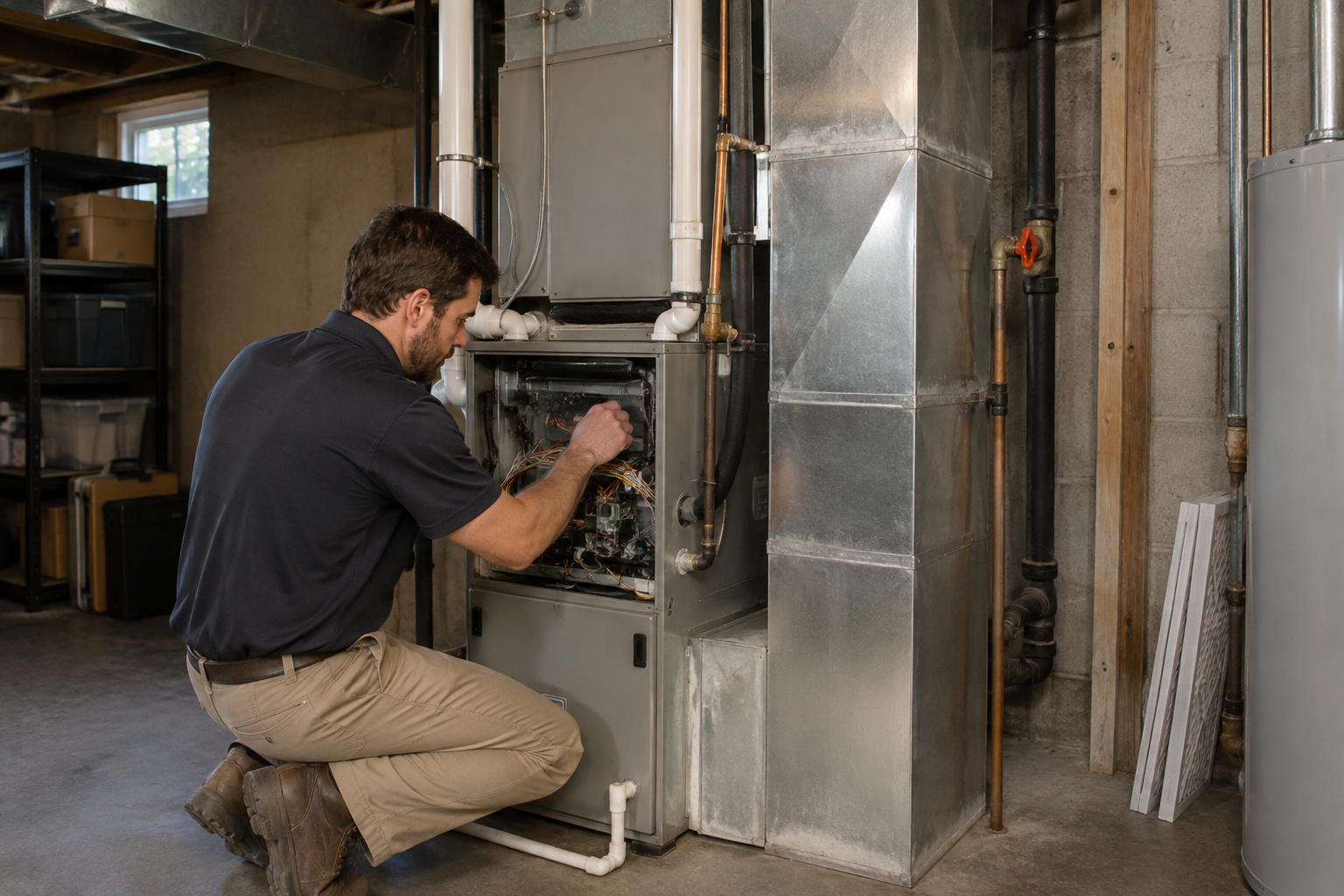
A dual-fuel heating system combines an electric heat pump with a gas or propane furnace, using controls to select which provides heat. The heat pump usually handles milder weather, while the furnace takes over when outdoor temperatures or operating costs make it the better choice. In November, that handoff can be especially useful as heating needs change from a mild afternoon to a cold night.
Think of it as two heat sources sharing one delivery system, rather than two separate systems you must manage. In a typical ducted setup, the heat pump delivers heat through an indoor coil, and the furnace’s blower moves that warmed air through the house. When furnace heating takes over, the burners supply the heat instead; during normal heating operation, the controls generally keep the heat pump and burners from running together.
The important detail is the changeover setting: the point at which the controls switch heat sources. There is no single outdoor temperature that is right for every home, because heat pump capacity, the home’s heat loss, fuel prices, and electricity rates all matter. A contractor should distinguish between when the heat pump can no longer meet the heating demand and when the furnace becomes less expensive to operate. For a homeowner in Sewickley, asking how that setting will be determined is more useful than accepting a generic factory setting without review.
Homeowners who already use a ducted furnace and need a new central air conditioner have a practical reason to explore dual fuel. A compatible heat pump can take the air conditioner’s place, providing summer cooling plus another source of winter heat while retaining furnace backup. In Bethel Park, that could be worth discussing before an AC replacement, but keeping an existing furnace depends on its condition and compatibility with the proposed equipment and controls.
Dual fuel can also suit homeowners who want to reduce fuel-burning heat without committing to an all-electric system. It is not automatically the lowest-cost option, and savings depend on utility rates, equipment performance, and how the system is configured. A home without suitable ducts, or one with relatively new heating and cooling equipment, may face installation costs that make a conversion less appealing.
Before approving a proposal, ask for a heating-load calculation, confirmation of equipment compatibility, and an explanation of how the thermostat will manage the handoff. The installation plan should also address airflow, electrical requirements, and access for servicing both heat sources. You should be able to set a comfortable temperature and let the controls coordinate the equipment, rather than manually switching back and forth.
Contact MRT HVAC Contracting to find out whether a dual-fuel system fits your home and your replacement plans. Our family-run team has served Greater Pittsburgh for over 30 years and can evaluate your existing equipment, explain compatible options as a York authorized dealer, and help you understand the proposed changeover settings. We can also discuss financing through Wisetack and York if you are planning an upgrade.
Need a hand with your system?
MRT HVAC serves Greater Pittsburgh with repairs, replacements and 24/7 emergency service.