
Repair your old boiler when the problem is isolated, the boiler itself is sound, and replacement parts are available. Consider replacement when major components are failing, repairs keep adding up, or a safe, dependable repair is no longer practical. This November, base the decision on what each option actually solves—not the boiler’s age alone.
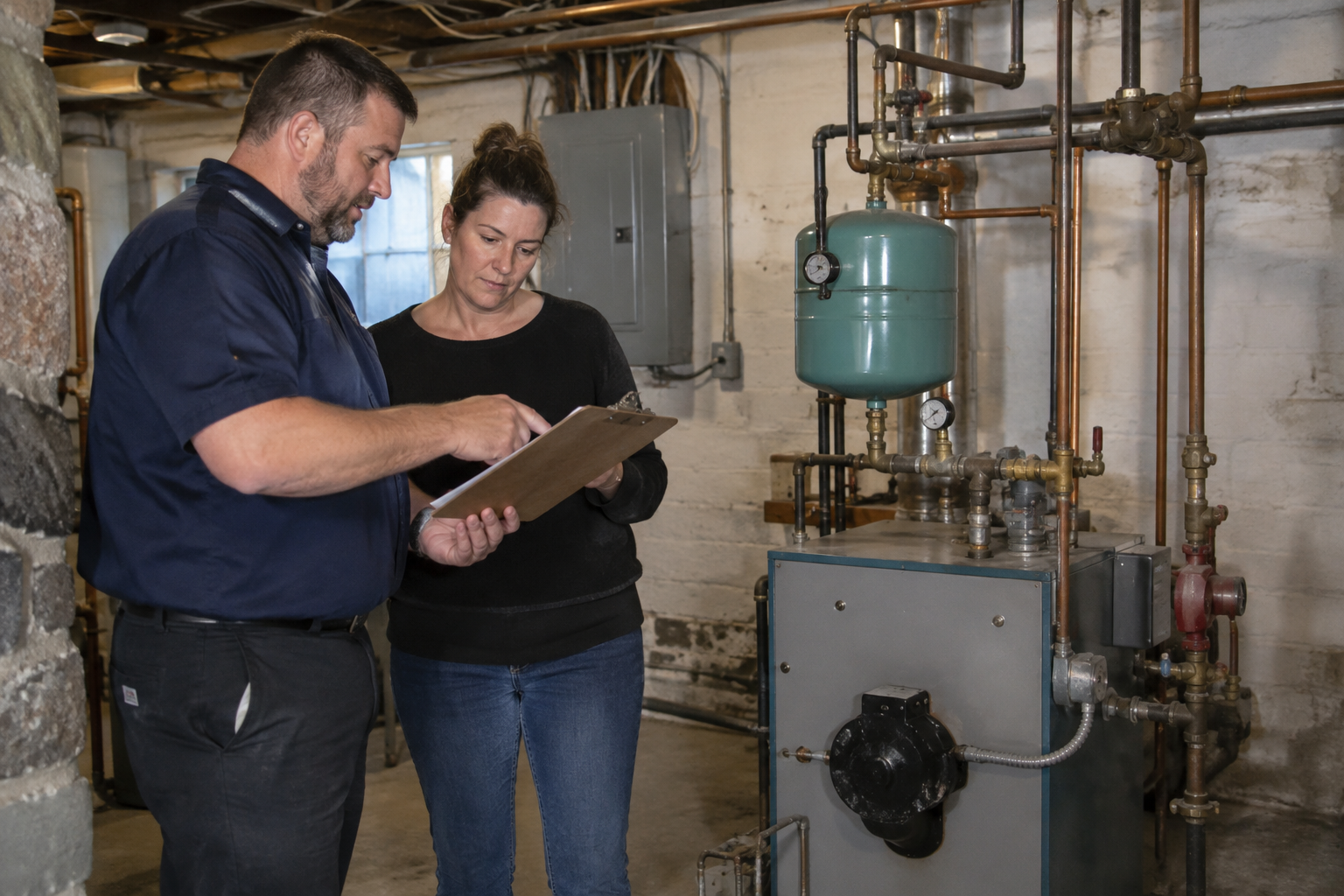
Start by asking your technician to separate the boiler’s condition from problems elsewhere in the heating system. A failed circulator, expansion tank, or zone valve may justify a targeted repair rather than replacing the equipment that heats the water. A leaking boiler section or heat exchanger deserves a different conversation, including whether repairs are feasible and what warranty would apply. For a homeowner in Carnegie, that distinction can prevent paying for a new boiler when the underlying distribution problem would remain.
Next, request two written scopes: one for restoring reliable operation and another for a complete replacement. The repair estimate should identify the failed component, any related work, and known concerns that would remain afterward. The replacement proposal should spell out piping changes, controls, venting, permits, disposal, and any chimney or condensate work needed. Compare complete solutions rather than a small repair quote against an installation price that leaves essential work unspecified.
If you are considering an upgrade, make sure the proposed boiler fits the home and its existing heating system. For hot-water systems, sizing should be supported by a heat-loss calculation; steam systems also require careful assessment of the connected radiators. A homeowner in Peters Township should ask how existing radiators or baseboards affect the proposed equipment’s operating temperatures and efficiency. A high-efficiency condensing boiler delivers its greatest efficiency benefit with sufficiently low return-water temperatures, so advertised ratings alone do not establish likely savings.
Then weigh the costs against your plans and your tolerance for another interruption. Ask for estimated fuel savings based on your usage and clearly stated assumptions, rather than accepting a guaranteed payback date or a rigid repair-cost percentage rule. If you expect to stay and have already paid for repeated repairs, replacement may offer more value; an isolated repair may be reasonable when the rest of the system checks out. Include warranty coverage, maintenance needs, financing costs, and the likely installation downtime in that comparison.
November timing matters, but urgency should not replace a clear explanation of your options. Ask whether a safe repair can keep heat available while you plan an upgrade, or whether the boiler needs to remain off until work is completed. Contact MRT HVAC Contracting for help evaluating your boiler and comparing the next steps; our family-run team has served Greater Pittsburgh for over 30 years and offers 24/7 emergency service.
Need a hand with your system?
MRT HVAC serves Greater Pittsburgh with repairs, replacements and 24/7 emergency service.