October’s cooler nights mean furnaces and boilers are getting back to work across Greater Pittsburgh. If your home uses fuel-burning equipment, this is a good time to review carbon monoxide safety. Carbon monoxide, or CO, is an invisible, odorless gas that can become dangerous when combustion equipment malfunctions or exhaust does not vent properly.
Gas- and oil-fired heating systems need proper combustion and a safe path for exhaust to leave the house. Damaged vent connections, blocked exhaust routes, or combustion problems can allow CO to enter living spaces. For a homeowner in Bethel Park, a furnace that still produces heat is not proof that it is operating safely.
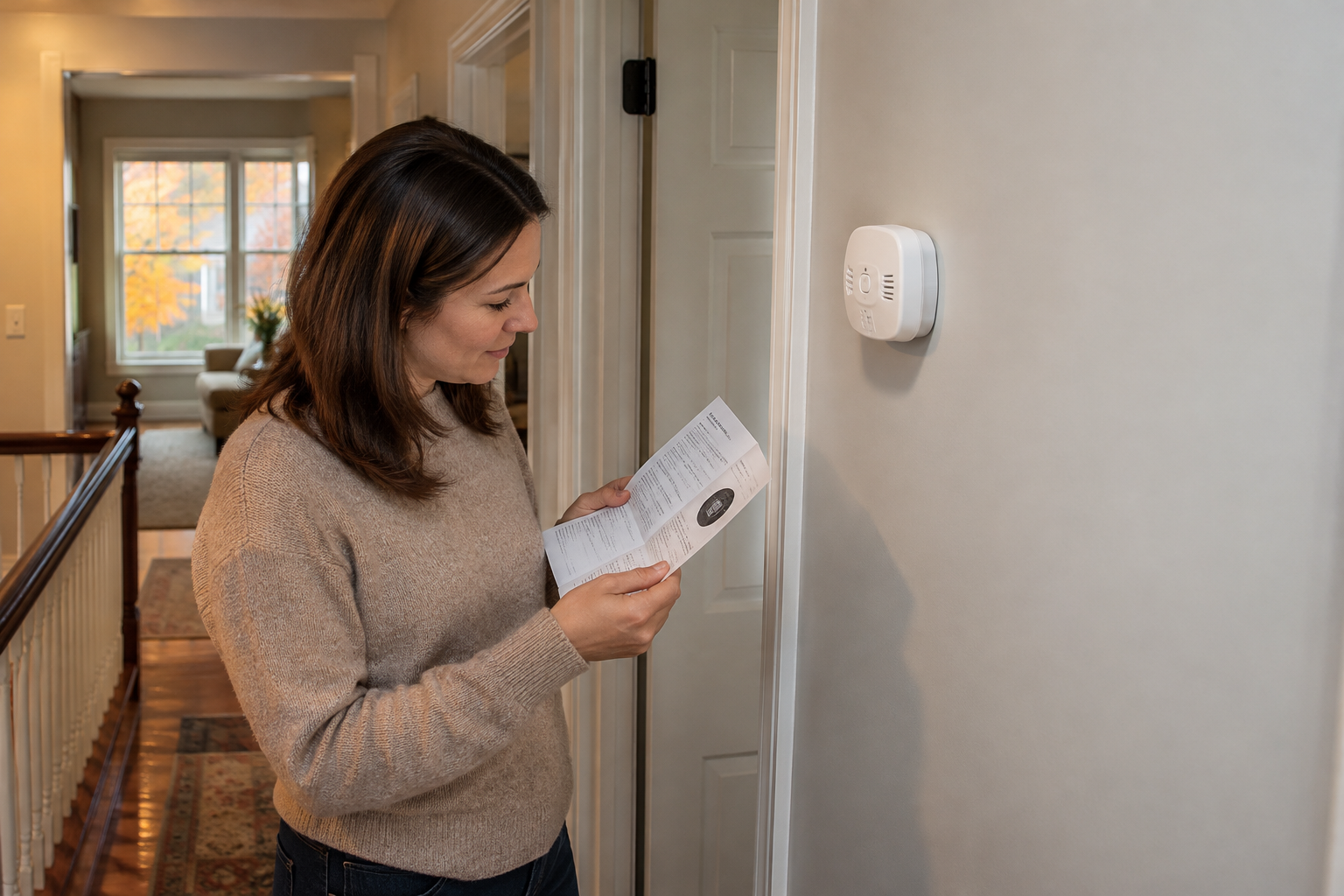
Install CO alarms on every level of your home and outside each separate sleeping area, following the manufacturer’s placement instructions and applicable local requirements. Test them as directed, replace batteries when required, and check the replacement date or end-of-life guidance for each device. Smoke alarms do not detect CO unless they are specifically labeled as combination smoke and carbon monoxide alarms.
From ground level, check that accessible outdoor heating intake and exhaust openings are not covered by leaves, stored items, or other debris. In Sewickley or anywhere else in the Pittsburgh area, include these openings in your fall yard cleanup without inserting tools into pipes or modifying their screens or fittings. Keep combustion-air openings clear, and leave chimney inspections, vent repairs, and internal equipment checks to qualified professionals.
If a CO alarm sounds, get everyone, including pets if you can do so without delay, outside into fresh air immediately and call 911 from outside. Headache, dizziness, nausea, or confusion can signal CO exposure, so treat suspected exposure as an emergency even if no alarm has sounded. Do not stay inside to find the source or reenter until emergency responders say it is safe.
Professional heating maintenance can include checking venting, evaluating combustion, and inspecting safety-related components, but it does not replace working CO alarms. Contact MRT HVAC Contracting, a family-run company serving Greater Pittsburgh for over 30 years, to schedule an October heating inspection or discuss a safety concern. We also offer 24/7 emergency HVAC service; for a CO alarm or suspected exposure, evacuate and call 911 first.
Need a hand with your system?
MRT HVAC serves Greater Pittsburgh with repairs, replacements and 24/7 emergency service.