
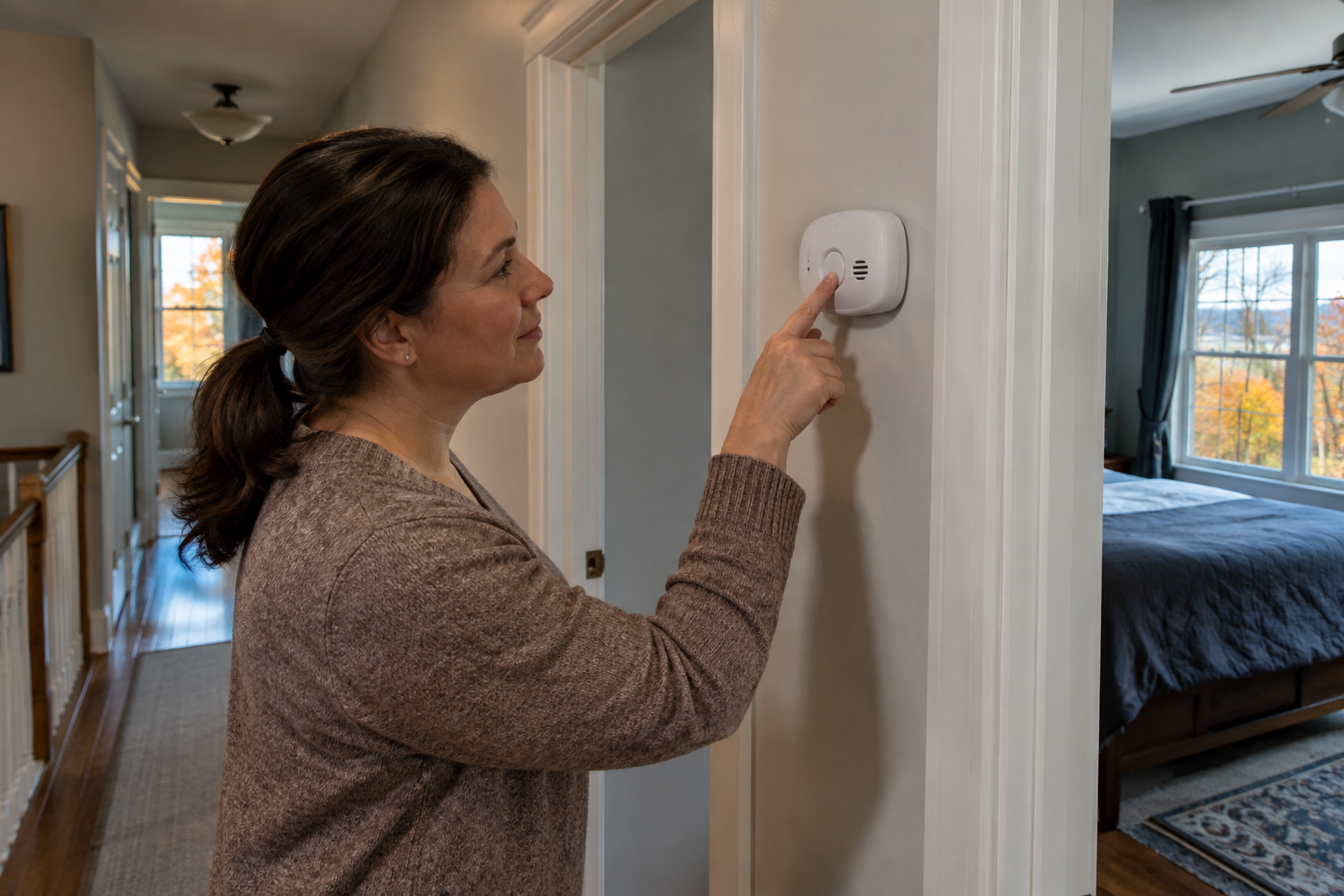
Carbon monoxide is one heating-season hazard you cannot see or smell. As Pittsburgh homeowners rely more on furnaces and boilers in November, working carbon monoxide alarms and properly maintained fuel-burning equipment become especially important. Natural gas, oil, propane, and wood-burning appliances can produce carbon monoxide when combustion or venting goes wrong.
Check that your home has carbon monoxide alarms on every level and outside each separate sleeping area, following manufacturer instructions and applicable local requirements. In a Sewickley home, for example, an alarm near the basement furnace does not replace the need for protection near upstairs bedrooms. Test each alarm as directed, check its replacement date, and remember that a combination smoke-and-CO alarm must specifically detect both hazards.
If a carbon monoxide alarm sounds, get everyone—including pets, if you can do so without delaying your exit—outside into fresh air immediately. Call 911 or the fire department from outside, and do not reenter until emergency responders say it is safe. Headache, dizziness, nausea, or confusion can be warning signs of exposure; leave immediately and seek emergency help if you suspect carbon monoxide, even if an alarm has not sounded.
Between professional visits, keep the area around your furnace or boiler clear and leave combustion-air openings unobstructed. If your equipment has outdoor intake and exhaust pipes, inspect their openings from ground level for leaves, debris, or later-season snow without inserting tools or altering the venting. For homeowners in Bethel Park planning November yard cleanup, this is a useful check to add before putting away outdoor tools.
Professional heating maintenance can identify concerns that an alarm cannot diagnose, including combustion problems, damaged venting, and equipment defects. Tell your technician about soot, unusual operation, or recent work involving chimneys, exhaust fans, or air sealing, since these can warrant closer attention to combustion air and venting. Never use an oven to heat your home or operate a generator indoors or in a garage, even with the door open.
Contact MRT HVAC Contracting to schedule heating maintenance or discuss a furnace or boiler safety concern before winter demand increases. Our family-run team has served Greater Pittsburgh for over 30 years and offers 24/7 emergency HVAC service. For an active carbon monoxide alarm or suspected exposure, evacuate and call emergency responders first—an HVAC service appointment is not a substitute for an emergency response.
Need a hand with your system?
MRT HVAC serves Greater Pittsburgh with repairs, replacements and 24/7 emergency service.