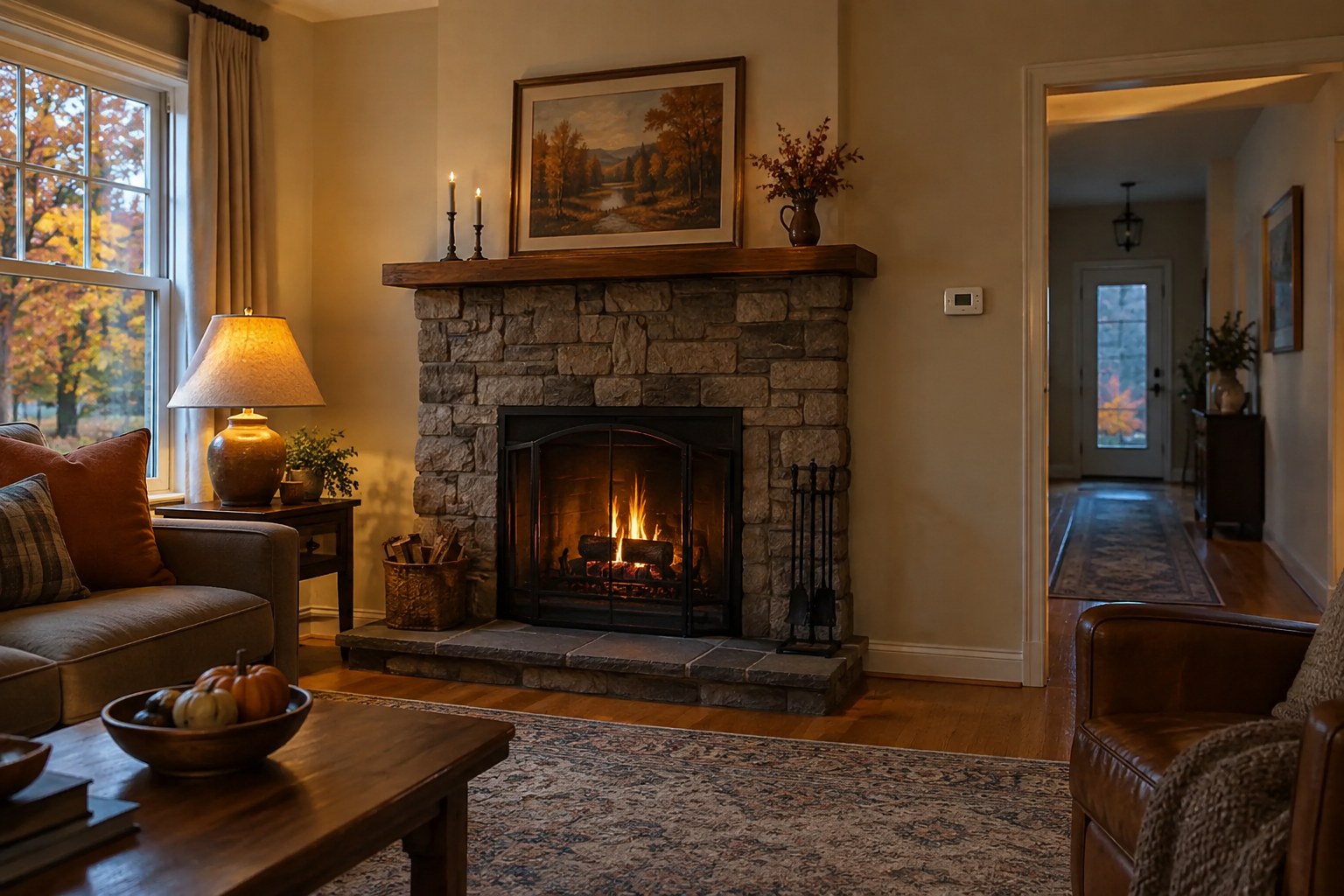
An October evening in Pittsburgh can make a fireplace especially inviting, even before the furnace is running regularly. But warming one room with a fire does not necessarily help the rest of your home. Your fireplace type, thermostat location, and airflow all influence how the two heat sources work together.
If your thermostat is near the fireplace, it may register enough warmth to stop calling for central heat while bedrooms remain chilly. In a Mt. Lebanon home, for example, the useful check is not simply whether the living room feels comfortable—it is whether rooms farther away are staying warm, too. Avoid immediately raising the thermostat several degrees, which may overheat the fireplace room without addressing the underlying control issue.
Some smart thermostats can use remote temperature sensors to base heating decisions on another room or an average of selected rooms. Compatibility and sensor settings vary, so adding a sensor is not automatically a fix. If fireplace use regularly disrupts comfort, an HVAC technician can evaluate thermostat placement, sensor options, and how your heating system is controlled.
A traditional open wood-burning fireplace also sends indoor air up the chimney, which can draw cold replacement air into the house through gaps and leaks. A sealed direct-vent gas fireplace operates differently, using outdoor combustion air rather than relying on room air. For homeowners in Sewickley comparing fireplace options, understanding that distinction is more useful than assuming every fireplace reduces furnace use or heating costs.
Before using a wood-burning fireplace this fall, arrange appropriate chimney inspection and cleaning, and follow the fireplace manufacturer’s operating instructions. Keep the damper open while a fire is burning and until the embers are completely extinguished; never close it early to hold in warmth. Once everything is fully out and cool, close the damper as directed to limit heat loss, and never block combustion-air openings or alter a gas fireplace’s venting.
If fireplace nights leave the rest of your house uncomfortable, contact MRT HVAC Contracting for help evaluating your thermostat and central heating system. Our family-run team has served Greater Pittsburgh for over 30 years and can recommend practical adjustments based on your home and equipment. For chimney cleaning or fireplace-specific repairs, use a qualified chimney or fireplace professional.
Need a hand with your system?
MRT HVAC serves Greater Pittsburgh with repairs, replacements and 24/7 emergency service.