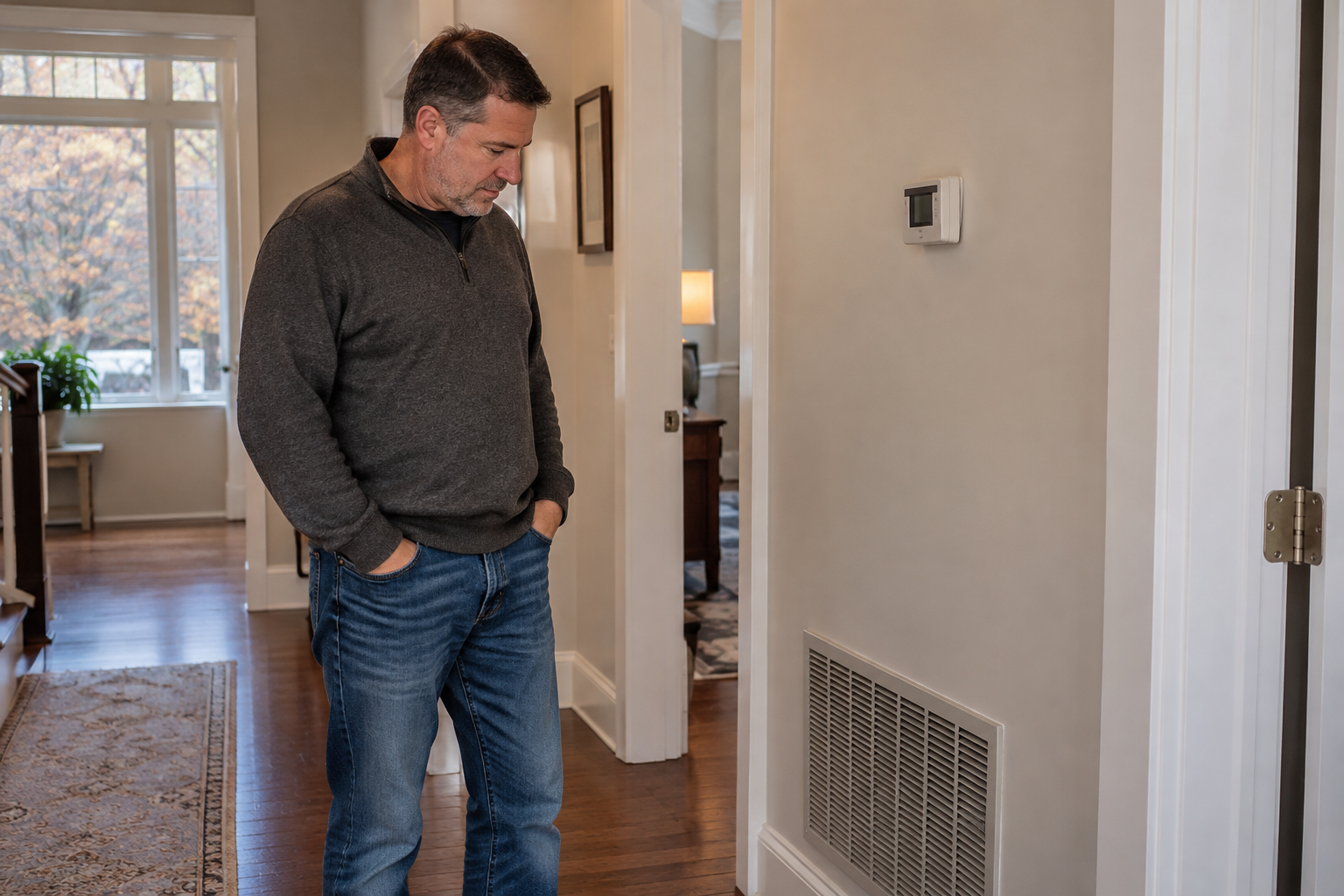
The first steady heating days of November can bring a familiar question: What’s that smell coming from the vents? A light dusty odor sometimes occurs when settled dust warms up after months without heat. But a strong, persistent, or recurring burning smell should not be dismissed as part of starting the heating season.
A typical startup dust odor should fade rather than intensify, without smoke or unusual equipment behavior. If your furnace has already been running regularly in your Dormont home, a new burning smell is less likely to be explained by its first seasonal startup. Pay attention to when the odor appears and whether it comes from one room, several vents, or the equipment itself.
An acrid smell resembling melting plastic, hot wiring, or burning rubber can indicate an electrical or mechanical problem. Turn the heating system off at the thermostat if it is safe to do so, and arrange professional service before using it again. If you see smoke, sparks, or flames, leave the home and call 911 rather than approaching the equipment.
A rotten-egg or sulfur-like odor calls for a different response because it may signal a fuel-gas leak. Leave immediately without operating the thermostat, light switches, appliances, or a phone inside, then call your gas utility’s emergency number or 911 from a safe location outside. Carbon monoxide has no smell, so an odor—or the absence of one—cannot tell you whether it is present.
For a mild odor without emergency warning signs, note any recent painting, cleaning, or other activity that could help a technician identify the source. In a Sewickley home, as anywhere else, the room where you notice a smell may not be where it originated because moving air can carry odors. Do not remove equipment panels, touch wiring, or repeatedly restart the system to see whether the smell returns.
If an unfamiliar heating odor persists or comes back, contact MRT HVAC Contracting to have the cause checked before colder weather makes reliable heat even more important. Our family-run company has served Greater Pittsburgh for over 30 years and offers 24/7 emergency service. For suspected gas leaks or fire, get to safety and contact emergency responders first.
Need a hand with your system?
MRT HVAC serves Greater Pittsburgh with repairs, replacements and 24/7 emergency service.