
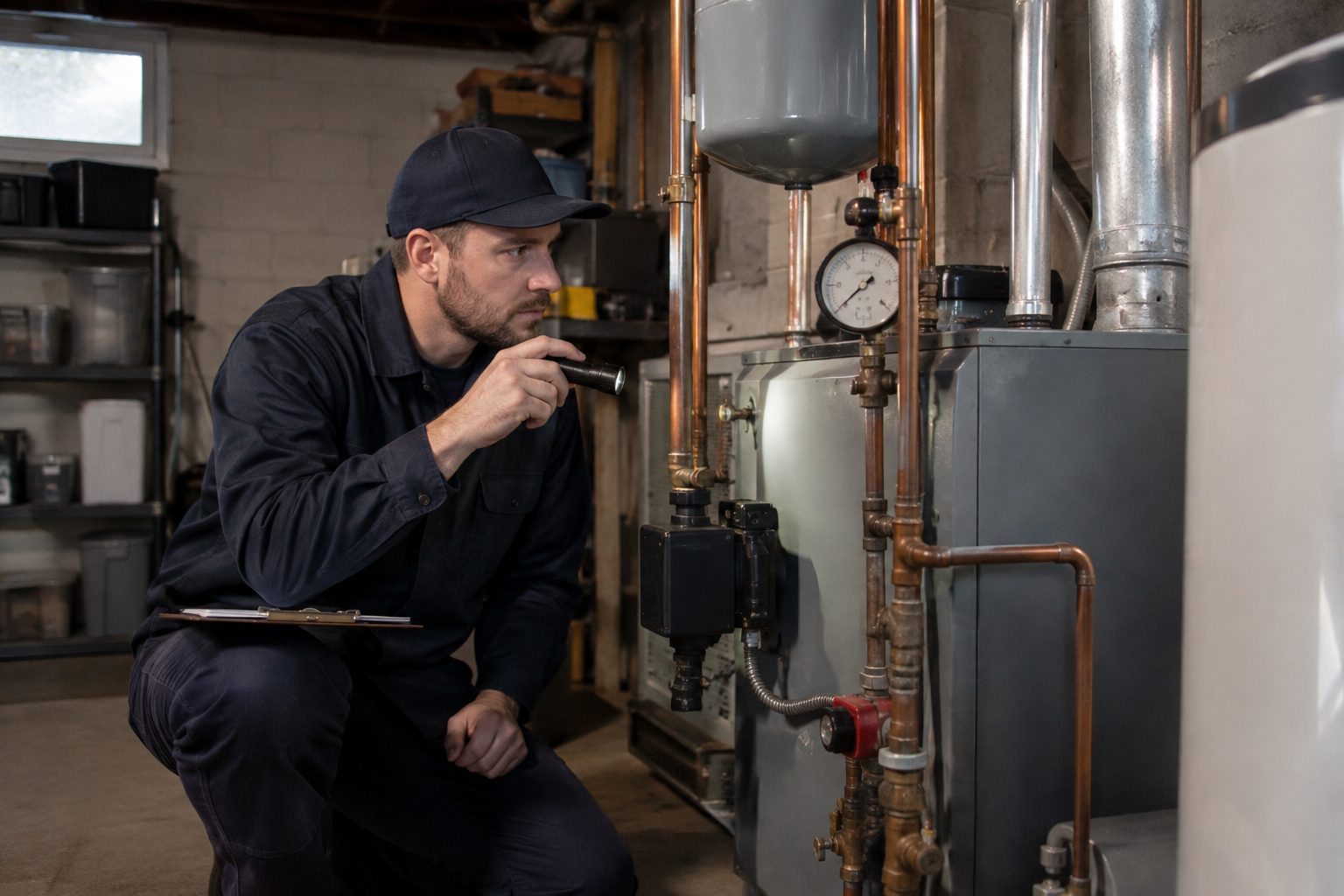
Your boiler needs professional attention if you notice leaking water, unusual pressure changes, repeated shutdowns, soot around the equipment, or a clear decline in heating performance. October is a good time to catch these changes rather than wait for a complete loss of heat. The most useful clue is often what has changed since your boiler last operated reliably.
1. Water or corrosion is appearing around the boiler. A new puddle, damp pipe connection, or rusty streak deserves inspection—even if the boiler still heats your home. Water can travel before it becomes visible, so a technician needs to locate the source rather than assume the nearest fitting is responsible. In a Bethel Park home, taking a photo of the damp area before your service visit can help document an intermittent leak; keep clear of hot surfaces and electrical components.
2. The pressure gauge behaves differently than it used to. On a hot-water boiler, large pressure swings, pressure that repeatedly drops, or water discharging from a relief pipe can point to an expansion tank, valve, or leak problem. Normal pressure depends on the system, so do not use a generic online number as a reason to adjust it yourself. Never cap a relief outlet or repeatedly add water to compensate for an unexplained pressure loss.
3. The boiler keeps locking out or asking for a reset. An error code or shutdown that returns after a reset needs diagnosis, not another round of button pressing. Record the displayed code and when the problem occurs, and avoid repeated resets that could restart equipment with an unresolved fault. For homeowners in Sewickley, that short service note is more useful than clearing the display before the technician arrives.
4. New soot or scorching appears on or near a fuel-burning boiler. These marks can indicate a combustion or venting problem and should not be brushed away and ignored. Stop using the equipment if you can do so safely and arrange prompt professional inspection; if a carbon monoxide alarm sounds or you smell gas, leave the home immediately and call emergency services or the gas utility from outside.
5. The boiler takes noticeably longer to satisfy the same heating demand. Colder weather naturally increases operating time, but slower recovery during comparable weather—or higher fuel use without an obvious explanation—can justify a performance check. A technician can investigate circulation, controls, heat-transfer surfaces, and combustion where applicable instead of assuming the boiler simply needs to run harder. Note the outdoor conditions and thermostat setting so the comparison is meaningful.
You do not need to wait for one of these signs to schedule preventive maintenance: an October visit gives a technician an opportunity to check for developing leaks, test applicable safety controls, and assess operation before heavier winter use. Contact MRT HVAC Contracting, a family-run company serving Greater Pittsburgh for over 30 years, to schedule boiler maintenance or discuss a warning sign you have noticed. If your heat fails unexpectedly, MRT HVAC also offers 24/7 emergency service.
Need a hand with your system?
MRT HVAC serves Greater Pittsburgh with repairs, replacements and 24/7 emergency service.